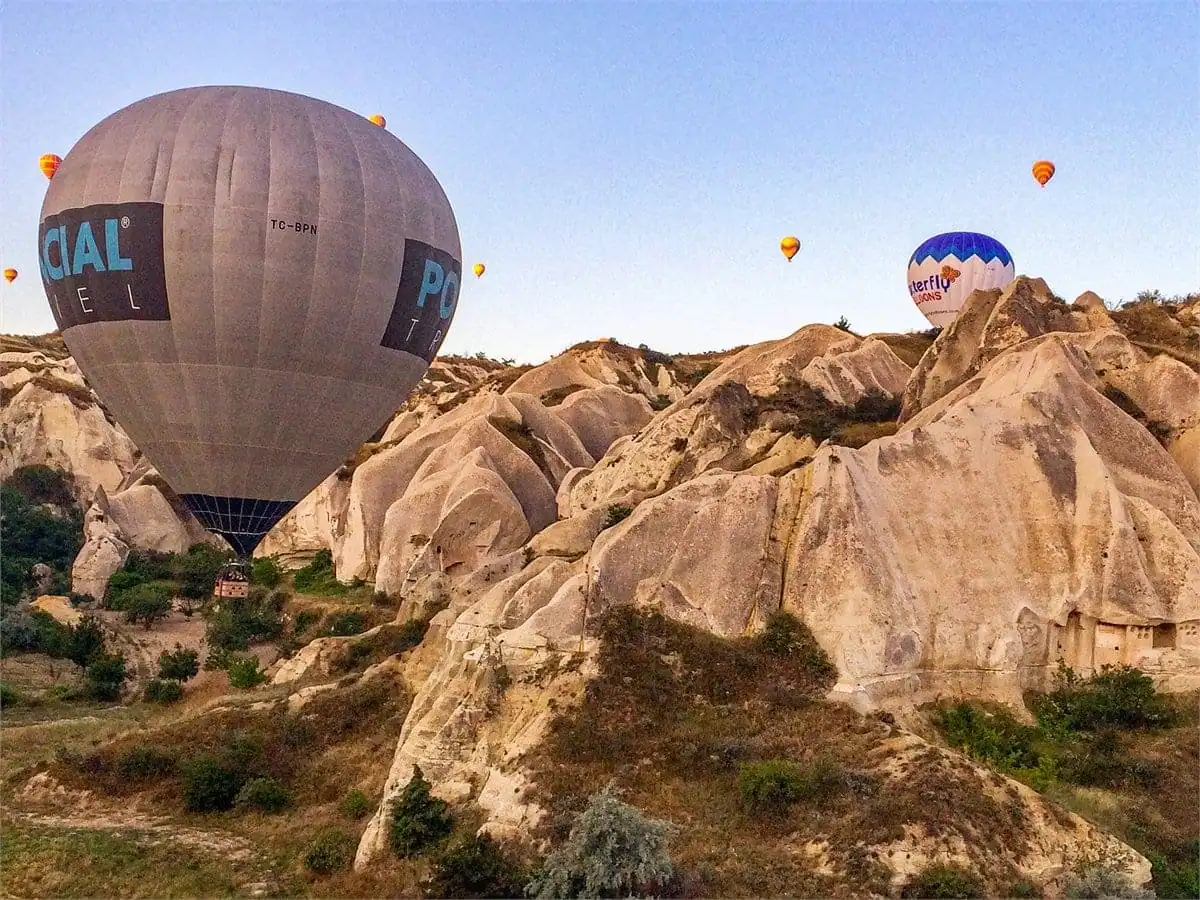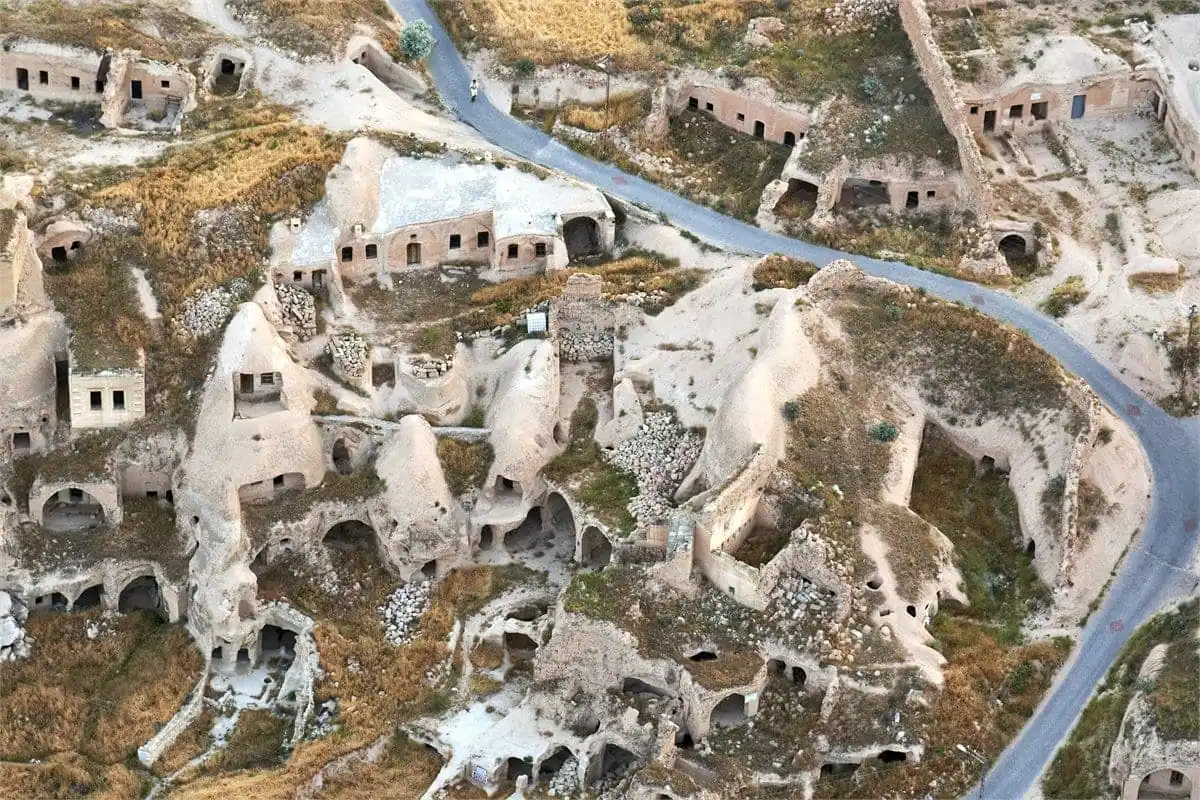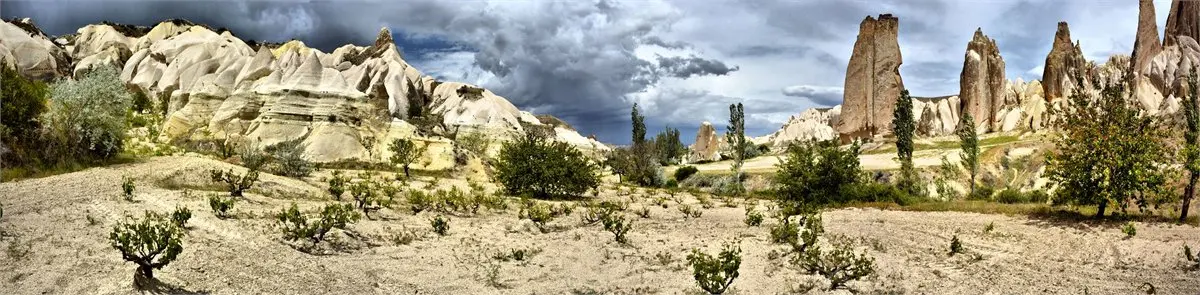
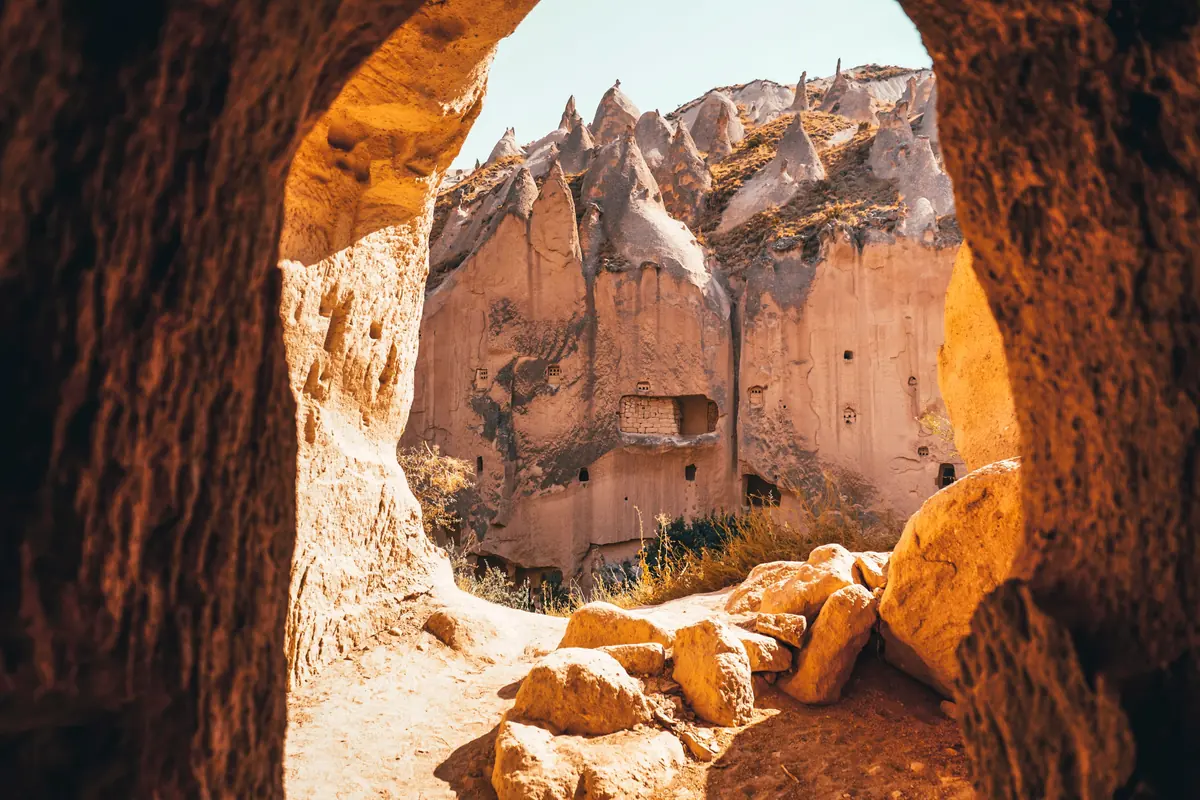
The Zelve Open Air Museum is an abandoned cave village in Cappadocia: three steep valleys near Avanos where families lived in rock-cut houses until 1952, when the danger of falling rock emptied them. Today Türkiye’s Ministry of Culture and Tourism runs it together with neighboring Paşabağ as a single archaeological site, open every day — and in our view it is the best place in the region to see how ordinary cave life actually worked.
Most visitors meet Cappadocia’s rock-cut past at the Göreme Open Air Museum, and they should: its painted churches are the region’s masterpieces. Zelve is the other half of the story. The caves here are houses, a mill, a winery, churches and a mosque, spread along paths that climb in and out of three valleys. The scale is a village rather than a monastery, and in our experience it is a far quieter one.
What is the Zelve Open Air Museum?
Nobody knows exactly when Zelve was first settled — the Ministry’s own description says the date is uncertain. What is clear is that between the 9th and 13th centuries it was one of the important Christian settlements and religious centers of the region, with monasteries and churches cut into the valley walls. The valleys stayed lived in long after that, as a working village with its own square, mill and mosque, and families went on making their homes in the rock for generations.
Erosion ended it. The same wind and water that explain how the fairy chimneys formed kept eating into Zelve’s cliffs, and by the middle of the 20th century falling rock had made the valleys unsafe. In 1952 the residents moved to Aktepe, a new village about two kilometers to the north, and in 1967 the empty valleys were given open-air museum status and placed under protection. The cliff village at Çavuşin was emptied for the same reason. That is why the rooms you walk into at Zelve feel so complete: they were homes within living memory.
Göreme shows you how Cappadocia prayed. Zelve shows you how it lived.
What to see in Zelve’s three valleys
The site spreads across three neighboring valleys on the steep northern slopes of Aktepe, and the Ministry’s own guide to them reads like a village inventory:
- The first valley holds a seten — the stone mill that crushed wheat into bulgur — the Balıklı (Fish) and Üzümlü (Grape) churches, and a winery on its eastern side.
- The second valley is home to the Church of the Holy Cross.
- The third valley has the old village square and a monastery complex carved into a dome-shaped mass of rock, with the village mosque facing it across the valley — monastery and mosque within sight of each other.
- At the far end, pigeon houses are cut high into the slopes, their facades decorated with simple folk designs, and the Direkli (Columned) Church stands where the path leads out.

The Ministry’s museum directory also lists a Geyikli (Deer) Church and a tunnel opening onto two of the valleys. Those pigeon houses were an economy of their own — the Pigeon Valley page explains why droppings were worth carving a cliff for. Come for the village rather than for frescoes: the region’s great painted interiors are at Göreme, in the cave churches of Cappadocia and above all in the Dark Church. And because erosion never stops here, keep to the marked paths and follow the gate staff’s advice on what is open that day.
Zelve Open Air Museum entrance fee and tickets
Zelve is ticketed, and one ticket covers two places. The Ministry sells admission to the Zelve-Paşabağlar Archaeological Site as a single ticket, so the multi-capped fairy chimneys and St Simeon’s hermit cell at Paşabağ (Monks Valley), just down the road, are part of the same visit. Zelve is also one of the sites covered by the Ministry’s Museum Pass Cappadocia, and Turkish citizens can enter with a MüzeKart.
The price itself is set by the Ministry and changes every year, sometimes more than once, so we do not print a figure that could be out of date by the time you read it. The current price is on the official page and at the gate, and our Cappadocia entrance fees guide explains how the state tickets and the Museum Pass arithmetic work. On our tours, tickets are bought in advance with our skip-the-line priority pass, and the fee is charged separately at the state price, with no markup.
Zelve opening hours and how long to spend there
At the time of writing, in September 2026, the Ministry lists Zelve as open every day from 08:00 to 20:00, with the ticket office closing at 19:15 — later than the Göreme Open Air Museum, which closes at 18:45. Hours shift with the season, and the Ministry’s own museum directory gives shorter winter hours, so check the official page before planning a late visit.
In our experience, an hour and a half to two hours lets you walk all three valleys without rushing, and longer if you want to climb into every room. Add 45 minutes to an hour for Paşabağ on the same ticket.
Zelve or Göreme Open Air Museum: which is better?
They are different places, not rival versions of the same one. Göreme is a monastic complex packed with the region’s finest painted churches, and it is the one to choose if you only have time for one and Byzantine art is the draw. Zelve is a village: more walking, more climbing, far fewer frescoes and, in our experience, far fewer people. It suits walkers, photographers, curious families and anyone who has already seen Göreme. If you can, do both. They are a short drive apart, and a private Cappadocia tour can put Göreme in the quiet early morning and Zelve in the late-afternoon light.
How to get to Zelve from Göreme
Zelve lies north-east of Göreme in the Avanos district, beyond Çavuşin and Paşabağ, on the same northern loop that our Cappadocia Red Tour drives. The Ministry gives its address as Aktepe village, Avanos. Its standard route stops at Paşabağ but does not go into Zelve itself, so if Zelve matters to you, tell us when you book and we will build a tailor-made Cappadocia tour around it. For how the villages sit in relation to one another, and how long the drives between them take, see our Cappadocia map.
When is the best time to visit Zelve?
Early or late in the day, for the light and for the temperature. Zelve is a walking site with little shade, and summer afternoons are hot: long-period records for Nevşehir put the average August high at 29.4°C (85°F), as our Cappadocia weather in August guide explains. Late afternoon turns the rock gold, and with the gate open into the evening in the long summer days, a visit after the coach groups have left is easy to arrange.
Whatever the season, wear shoes with grip. The paths are sandy and steep in places, and the rock underfoot is soft tuff. Carry water in summer, and allow extra time after winter rain or snow, when the valley floors turn muddy.
Sources & further reading
- Ministry of Culture and Tourism — Zelve-Paşabağlar Archaeological Site — official site name, the three valleys and their monuments, address, and visiting hours (08:00–20:00, ticket office closes 19:15, open every day, at the time of writing)
- Ministry of Culture and Tourism — Göreme Open Air Museum — published visiting hours, 08:00–18:45, open every day
- Turkish State Meteorological Service (MGM) — Nevşehir — long-period (1981–2010) August average high of 29.4°C