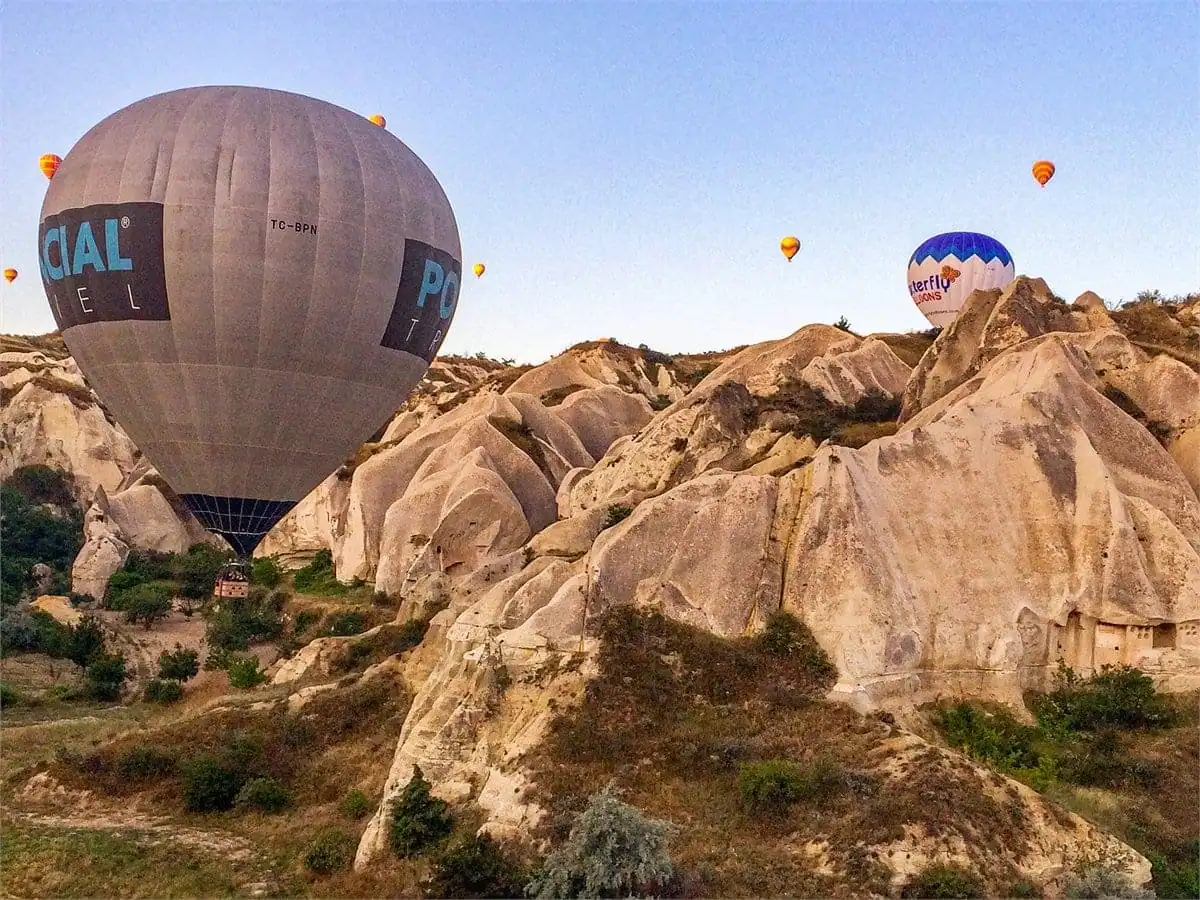
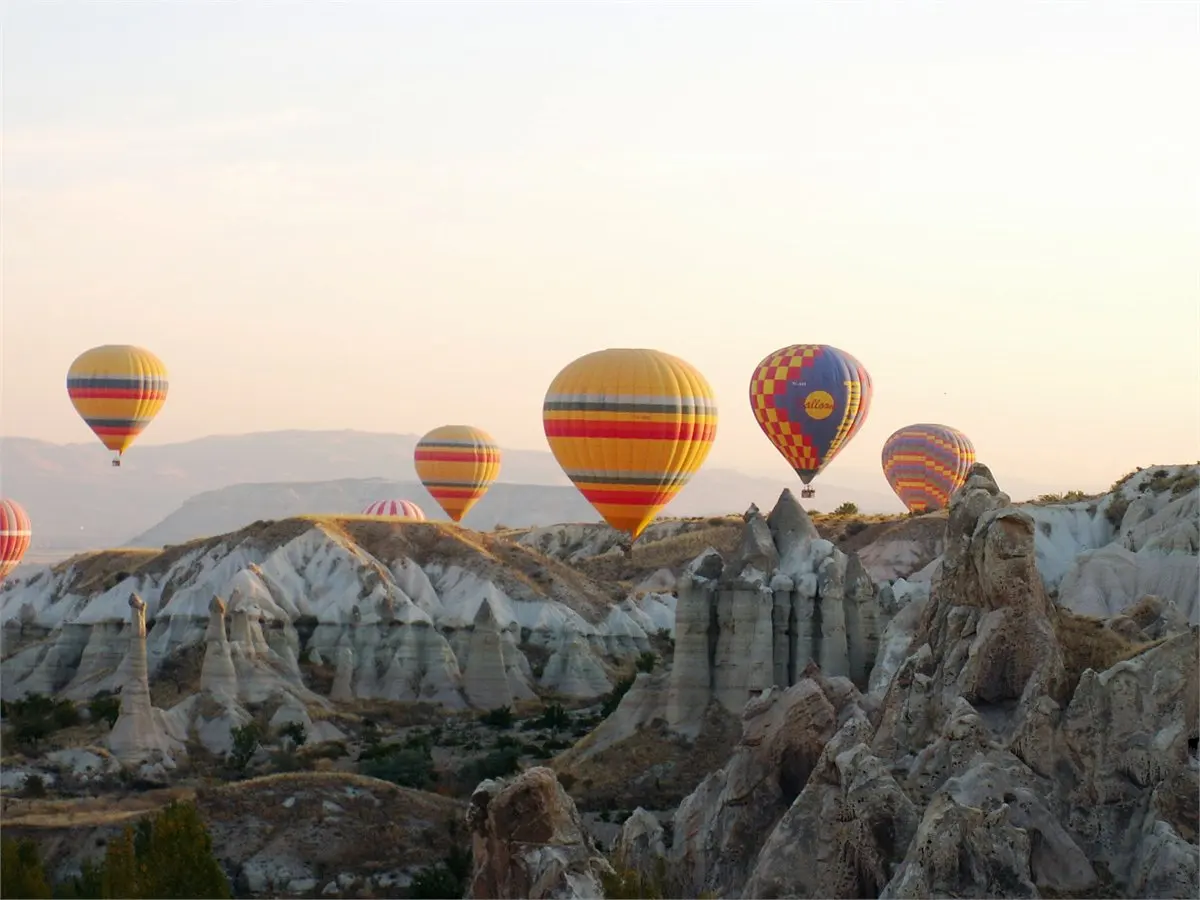
Every evening in Cappadocia, a few hundred travelers go to bed wondering the same thing: will the balloons fly tomorrow? This page is our attempt to answer that honestly — with real forecast data, read the way a balloon pilot reads it, and with a clear line between what the numbers suggest and what anybody can actually promise.
Who really decides whether balloons fly?
Not us, and not the balloon company. In Cappadocia the Directorate General of Civil Aviation (SHGM) assesses conditions and clears or grounds the morning’s flights — usually the night before, sometimes at the launch field itself if the wind changes its mind. Operators then call their passengers. That decision is final, it is a safety decision, and no forecast page on the internet can pre-empt it.
What a forecast can do is tell you which way the odds are leaning, so you can plan around them: book the flight for your first morning, keep the second free, and know before you arrive whether you have drawn a calm week or a windy one.
Why dawn wind is the only wind that matters
This is the single most useful thing to understand, and it is why a normal weather app misleads people here. Cappadocia sits at about 1,100 meters on an open plateau, and its wind follows a daily rhythm: still at first light, building through the morning, strongest in the afternoon, dropping again after dark.
So a forecast showing “wind 24 km/h” for tomorrow can sit on top of a dawn wind of 4 km/h. Travelers see that number, panic, and write to us convinced their flight is doomed — when in fact it is a perfect flying morning. Every wind figure on this page is taken from roughly an hour either side of sunrise, which is when the balloons inflate, launch and land.
The limits we use, in the open
Commercial balloons are limited by surface wind rather than by cloud or cold. Ours are the conservative end of standard practice, and we publish them so you can judge the estimate for yourself rather than trusting a colored dot:
| Estimate | Dawn wind | Gusts | Also needs |
|---|---|---|---|
| Looking good | under 12 km/h | under 20 km/h | dry, clear, good visibility |
| Borderline | up to 18 km/h | up to 28 km/h | little rain in the window |
| Unlikely | above 18 km/h | above 28 km/h | — or fog, snow, storms |
Fog deserves its own mention: it grounds flights even in dead-calm air, and a still, damp autumn dawn is exactly when it forms. A perfectly windless morning is not automatically a flying morning.
What the wind direction tells you
Balloon pilots cannot steer left or right. They climb and descend to find a layer of air moving the way they want, and ride it — which means the wind direction shown above quietly decides where you fly, not just whether. A northerly dawn tends to carry balloons down over Love Valley; other directions send the fleet towards Göreme or the Rose Valley side. It is also why the launch field itself moves from morning to morning, and why our sunrise tour picks its viewpoint only after the field is known.
How the odds change through the year
Forecasts run out at about two weeks, so if you are still choosing dates, seasons are the better guide. September and October give the calmest, most reliable dawns of the year; April to June is close behind. Deep winter is the gamble — genuinely beautiful when it flies, and capable of grounding several mornings in a row when it does not. The month-by-month detail lives in our best time to visit guide, and the full flight experience is described on the balloon tour page.
If your flight is canceled
You lose nothing but the morning. Weather cancellations are refunded or rebooked in full by the operator — that is standard across every licensed company here, and it is worth getting in writing from whoever you book with. The practical protection is simply time: book the flight for your first available dawn so a cancellation still leaves you another attempt, which is exactly why we recommend two nights minimum in our day-count guide.
And if the sky is grounded, the ground is not. The underground cities do not care what the wind is doing, the valleys are at their moodiest under storm light, and a private day simply reshapes itself around the weather. Some of our guests’ favorite photographs came from mornings the balloons never left the field.
Sources & further reading
- Open-Meteo — the forecast data on this page, licensed CC BY 4.0
- Turkish State Meteorological Service — Nevşehir — the official national forecast
- Directorate General of Civil Aviation (SHGM) — the authority that clears or grounds each dawn