
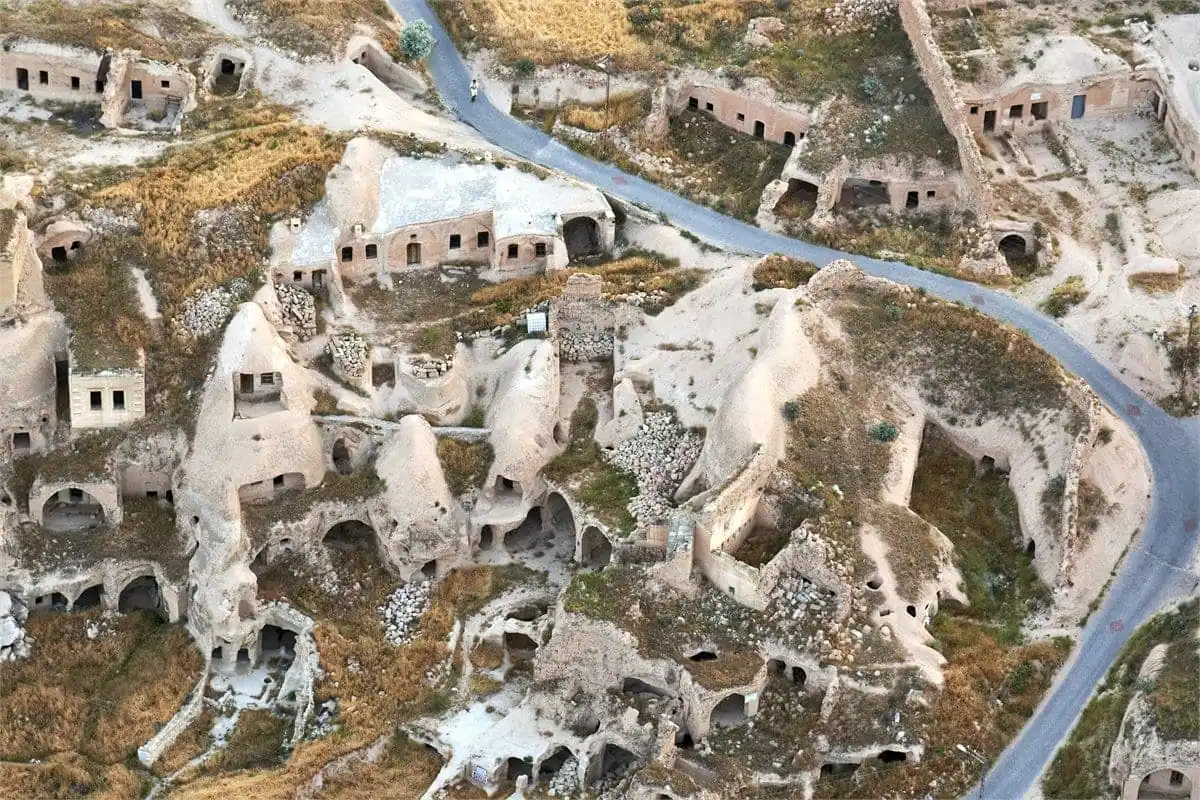
Once you learn to read Pigeon Valley, half of Cappadocia becomes legible. Those neat square openings high on every cliff — too small for rooms, too regular for erosion — are dovecotes, carved pigeon lofts, and this valley holds thousands of them. They were not ornamental. They were infrastructure.
Volcanic tuff weathers into fertile soil, but it is poor in nitrogen, and the fix for a thousand years was pigeon droppings — collected annually from the lofts, carried down in sacks and dug into the vineyards, melon fields and orchards. Families owned and inherited dovecotes the way they owned the fields beneath them; many are whitewashed and painted around the entrance, partly decoration, partly (locals will tell you) advertisement to the pigeons, who appreciate being courted. The system faded only when chemical fertilizer arrived in the twentieth century. The pigeons, unbothered, remain.
The walk and the viewpoint
Two ways to take the valley. The viewpoint on the Uçhisar road is the thirty-second version: the classic panorama down the wooded gorge to Göreme, plus the famous evil-eye tree — a gnarled branch structure strung with hundreds of blue nazar amulets, the region’s cheerful insurance policy against envy. Every coach stops; the view forgives them.
The walk is the better version: about four kilometers from Uçhisar down to Göreme, losing height gently through orchards, tunnels of rock and constant dovecote cliffs. It is the easiest genuinely rewarding hike in the region — we often walk guests down it while the driver repositions, a trick the tailor-made days use shamelessly. Go Uçhisar-to-Göreme, not the reverse, unless you enjoy uphill endings.
Sources & further reading
- UNESCO: Göreme National Park — the protected landscape