The Cappadocia weather in January is the coldest of the year: long-period records put the average daytime high at 4.1°C (39°F) and the average overnight low at −3.5°C (26°F), for a monthly mean of exactly 0.0°C. That mean is the whole month in one number — January is the only month on the plateau whose average day sits on the freezing point itself. Our licensed guides work through it every winter, and it is the month with the best odds of snow lying on the fairy chimneys.
We will not sell you a warm January. What we will tell you is that it is the most photogenic month Cappadocia has, the cheapest, and the emptiest — and that travelers who come prepared for it almost always say it was the trip they remember. The rock looks different under snow. So does the light.
What is the weather in Cappadocia in January like?
Freezing nights, cold bright afternoons, and ice that does not clear from shaded ground. The Turkish State Meteorological Service publishes long-period averages for Nevşehir — the province covering Göreme, Ürgüp and the whole visitor heartland — and for January they give an average high of 4.1°C, an average low of −3.5°C and a mean of 0.0°C. In practice that means frost on essentially every morning, ice in the valley bottoms that can last all day, and a sun that feels genuinely pleasant on your face while the air around you does not.
The months either side place it. December averages a 6.2°C high and a −1.4°C low; February climbs only marginally to 6.0°C and −2.6°C. January is the floor between them, about two degrees colder by day than the month covered in our Cappadocia weather in December guide and the coldest of the three months whose average night is below zero.
January is the only month whose long-period mean sits exactly on freezing. Everything about traveling here in it follows from that one number.
Temperature in Cappadocia in January: day and night
| Month | Average high | Average low | Monthly mean |
|---|---|---|---|
| December | 6.2°C (43°F) | −1.4°C (29°F) | 2.0°C (36°F) |
| January | 4.1°C (39°F) | −3.5°C (26°F) | 0.0°C (32°F) |
| February | 6.0°C (43°F) | −2.6°C (27°F) | 1.3°C (34°F) |
The gap between a January dawn and a January afternoon is about seven and a half degrees — the narrowest swing of the year. Unlike October, where the coat comes off by eleven, in January the coat stays on. These are long-period averages from 1981–2010, so an individual week can run well above or below them: January can hand you a still, blue, −8°C morning or a gray 8°C one, and both are normal.
Does it snow in Cappadocia in January?
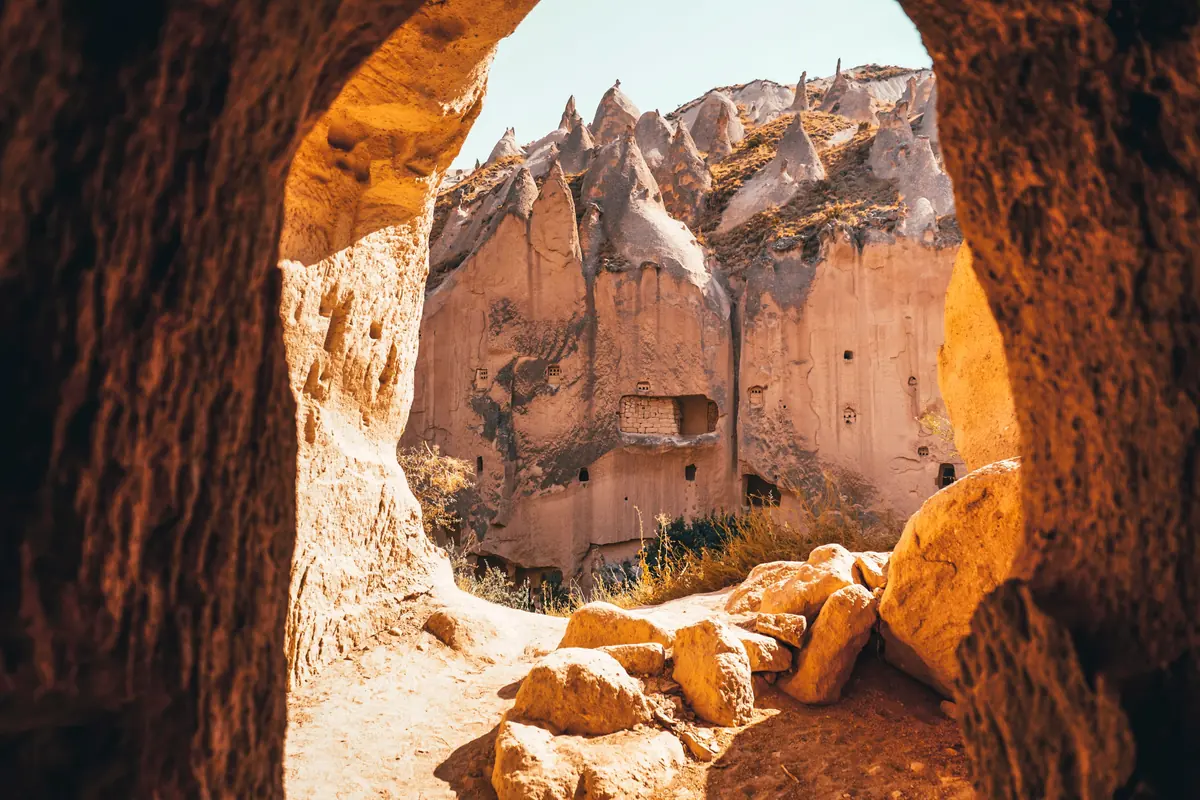
Yes — January is the likeliest month of the year for snow that actually lies. With an average high barely above freezing and average nights well below it, cold-side precipitation falls as snow rather than rain, and once it is down it stays down: there is no 11°C afternoon to take it away, as there is in March. Snow on the fairy chimneys is the photograph people travel here in winter for, and January is when the odds are best.
What we will not do is give you a percentage, because no honest source gives us one. The MGM long-period table for Nevşehir publishes temperatures and nothing else — no rainfall totals, no rain days, no snow days — so any monthly snow statistic you read elsewhere did not come from it, and it did not come from us. What MGM does record separately, in the station extremes, is a maximum measured snow depth of 64 centimeters, set on 2 February 1992. That is a single day more than thirty years ago and should be read as the ceiling, not the expectation. Our Cappadocia in winter guide covers the December-to-March window as a whole season.
Do the hot air balloons fly in Cappadocia in January?
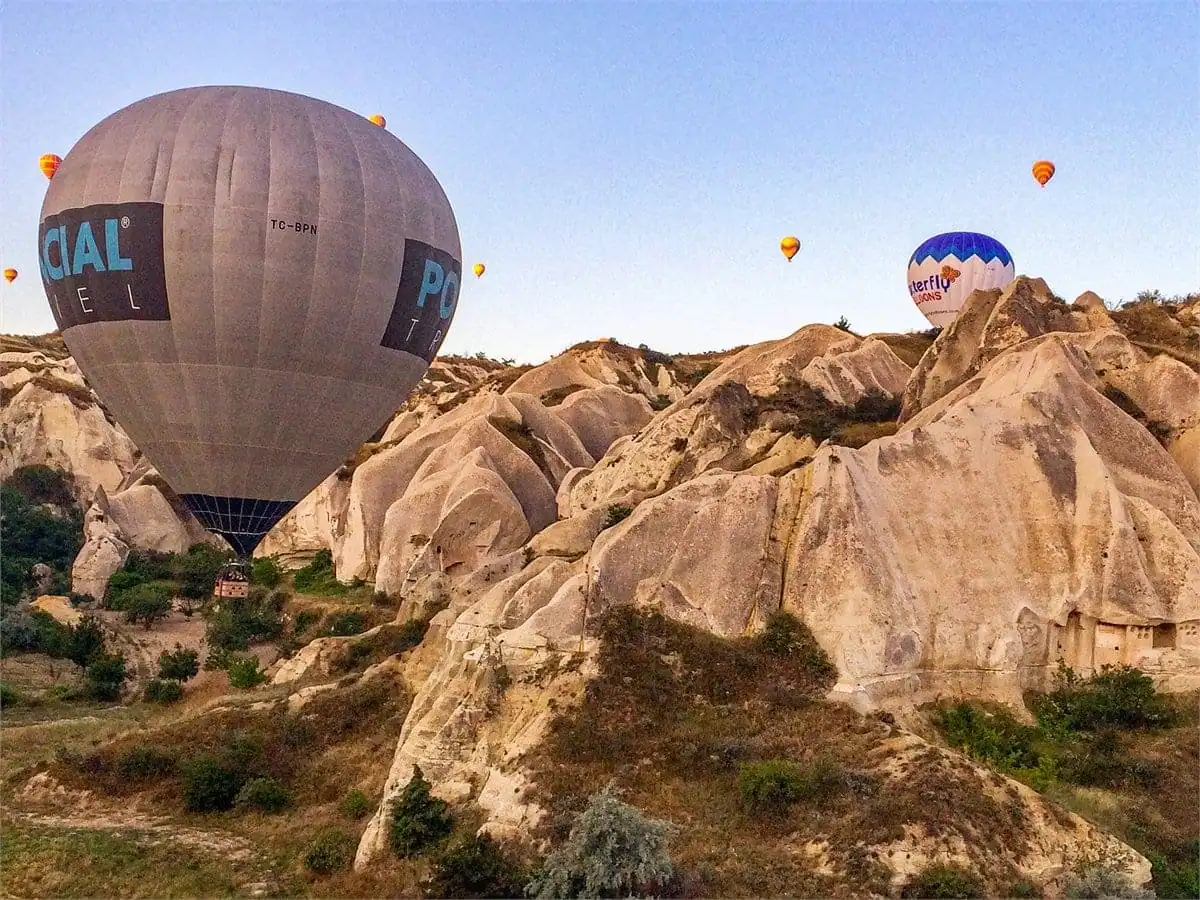
They do fly in January, and a balloon over fresh snow is the best version of the flight there is — but this is the month to build the most slack into your plans. Türkiye’s civil aviation authority, not the pilots and not any tour operator, reads the wind at several altitudes before every sunrise and grounds the whole fleet on mornings it does not clear. Winter systems cross the plateau quickly and the cancellation rate is higher than in autumn, so we book a hot air balloon flight for your first morning and keep the later dawns as free retries. Three nights is the minimum we would plan in January; four is better. If your dates are inside the next fortnight, our balloon forecast shows the dawn wind reading for every remaining morning.
Dress for the launch field as you would for a ski lift, and then add a layer. Standing still in the dark at −4°C while an envelope inflates is colder than any thermometer admits, and the basket is open to the air the whole flight.
Is Cappadocia worth visiting in January?
For the right traveler, it is the best month of the year. Every site is open, the valleys are empty, the cave hotels light their stoves, prices are at their lowest of the calendar, and the chance of walking out into a white landscape is higher than at any other time. The trade-offs are real and we would rather state them plainly: short daylight, frozen mornings, more balloon cancellations than any other season, and lower trails that can be icy or slushy underfoot. If warmth is what you want, our best time to visit Cappadocia guide will point you elsewhere.
What should you wear in Cappadocia in January?
Genuine winter clothing, not a city coat. A warm insulated jacket, thermal layers underneath, hat, gloves and a scarf for the dawn starts, and waterproof boots with grip — the volcanic valley floors turn to mud and then to ice, and smooth soles are the single most common mistake we see. Add sunglasses: winter sun on snow at 1,000 meters is bright enough to matter. Our full what to pack for Cappadocia guide runs through the complete list season by season.
How to plan a January day here
- Keep the first dawn for the balloon and the rest as spares. A sunrise viewpoint is a fine substitute on a grounded morning, and it costs you nothing but an early alarm.
- Go underground to get warm. Derinkuyu holds a steady 14°C in every season — in August it is the coolest place in Cappadocia, and on a freezing January morning it is markedly warmer than the street above it.
- Choose the painted churches over the long walks. The Göreme Open Air Museum and the Dark Church are indoor-ish, short-walk and at their quietest all year — a Red Tour day is the sensible January shape.
- Start later than you would in summer. Daylight is short and the ice on shaded paths does not soften before mid-morning; there is nothing to be gained from an 08:00 valley walk in January.
- Build in an afternoon indoors. A long lunch and a local artisan visit — a potter’s wheel in Avanos, a loom, a workshop with a stove going — is exactly the right way to spend a January afternoon. Guests are always welcome and never pressured to buy a thing.
- Book three nights minimum, four if the balloon matters. Every night you sleep here buys one more chance at a flyable dawn.
Sources & further reading
- Turkish State Meteorological Service (MGM) — Nevşehir — long-period (1981–2010) December, January and February temperature averages, and the station record maximum snow depth of 64 cm on 2 February 1992; the monthly table publishes no precipitation averages
- Directorate General of Civil Aviation (SHGM) — the authority that clears or grounds balloon flights each dawn, in every season