The Cappadocia weather in February is cold and slowly loosening: long-period records put the average daytime high at 6.0°C (43°F) and the average overnight low at −2.6°C (27°F), for a monthly mean of 1.3°C (34°F). February is the last month of the year whose average night sits below freezing — March is the one that climbs back out. Our licensed guides run the valleys all winter, and February is the month that still delivers snow while the afternoons have started, just perceptibly, to warm.
On paper February and January look almost the same. On the ground they are not. The days are visibly longer, the sun has some weight in it by early afternoon, and the second half of the month can hand you a walkable 10°C day that January never would. It is still winter. It is winter with a door open at the end of it.
What is the weather in Cappadocia in February like?
Frozen mornings, cold-to-cool afternoons, and more variety than the averages suggest. The Turkish State Meteorological Service publishes long-period averages for Nevşehir — the province covering Göreme, Ürgüp and the whole visitor heartland — and for February they give an average high of 6.0°C, an average low of −2.6°C and a mean of 1.3°C. Frost is normal on most mornings, shaded valley floors can stay icy all day, and the same week can deliver settled snow and bare brown vineyards.
The months either side show where it sits. January averages a 4.1°C high and a −3.5°C low; March jumps to 10.9°C and 1.0°C. February is barely two degrees warmer by day than the depth of winter described in our Cappadocia weather in January guide, and nearly five degrees colder than the thaw month covered in our Cappadocia weather in March guide. The step out of winter happens after February, not during it.
February is the last month of the Cappadocian year whose average night is below freezing. The thaw is March’s job, not February’s.
Temperature in Cappadocia in February: day and night
| Month | Average high | Average low | Monthly mean |
|---|---|---|---|
| January | 4.1°C (39°F) | −3.5°C (26°F) | 0.0°C (32°F) |
| February | 6.0°C (43°F) | −2.6°C (27°F) | 1.3°C (34°F) |
| March | 10.9°C (52°F) | 1.0°C (34°F) | 5.5°C (42°F) |
The daily swing is about eight and a half degrees — wider than January’s, narrower than autumn’s. In practice the coat stays on all day, but the hat and gloves come off around midday in the second half of the month. These are long-period averages from 1981–2010, and February is a month that departs from them cheerfully in both directions.
Does it snow in Cappadocia in February?
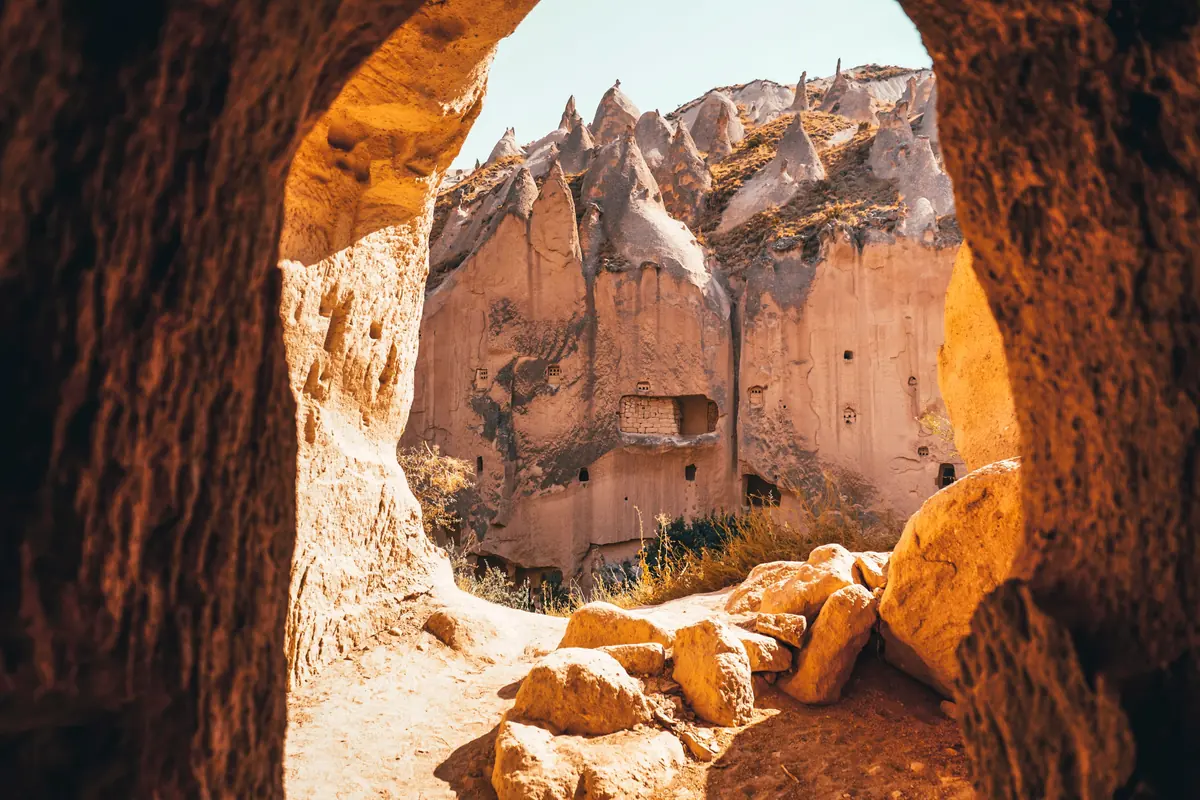
Yes, and February shares with January the best odds of snow that lies rather than melts. With average highs around 6°C and average nights below zero, cold-side precipitation still falls as snow and can stay on the ground for days at valley level. Snow on the fairy chimneys is the reason a good number of our winter guests come, and January and February are the two months to aim at for it.
We will not publish odds, because no honest source gives us any. The MGM long-period table for Nevşehir publishes temperatures and nothing else — no rainfall totals, no rain days, no snow days — so any February snow percentage you read elsewhere did not come from it. What MGM does record separately, in the station extremes, is the region’s maximum measured snow depth: 64 centimeters, set on 2 February 1992. That is the deepest snow ever recorded at the station, on one day more than thirty years ago. Read it as the ceiling of what February can do, not as what it usually does. Our Cappadocia in winter guide covers the whole December-to-March season.
Do the hot air balloons fly in Cappadocia in February?
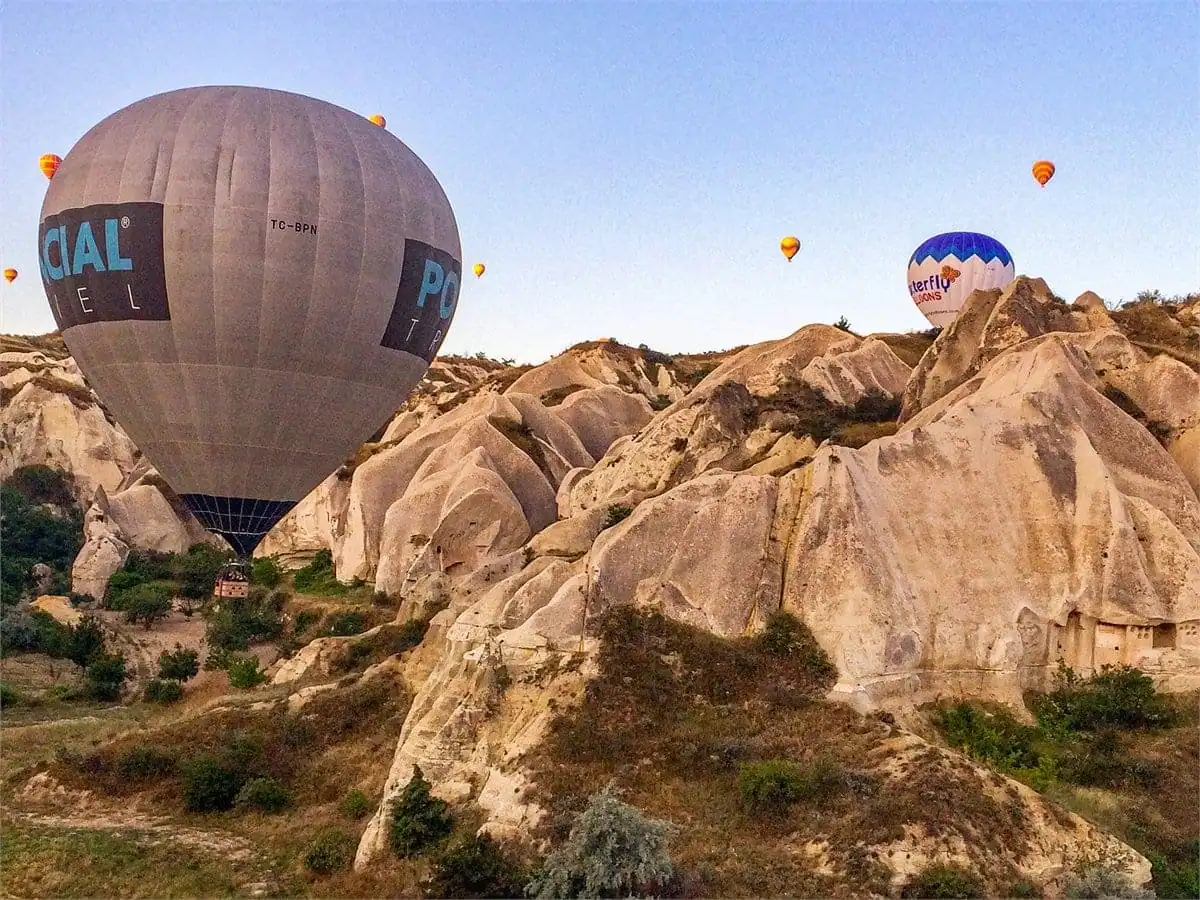
They do, on the mornings the wind allows, and a flight over a white plateau is worth the cold. Türkiye’s civil aviation authority — not the pilots, and not any tour operator — assesses the wind at several altitudes before every sunrise and grounds the whole fleet on mornings that do not clear. February systems move through quickly, so a grounded dawn is often followed by a flawless one. That is exactly why we book a hot air balloon flight for your first morning and keep the later dawns free as retries, and why three nights is our minimum recommendation in winter. Our balloon forecast shows the dawn wind reading for the next fortnight.
Dress for the launch field as you would for a ski lift. A −3°C pre-dawn pickup, standing still while an envelope inflates, is a colder proposition than the number suggests, and the basket is open to the air throughout.
Is Cappadocia worth visiting in February?
Yes, if snow, quiet and value matter more to you than warmth. Every site is open, the valleys are as empty as they ever get, cave hotels have their stoves lit, and prices sit at the bottom of the year alongside January. Lengthening daylight makes February the easier of the two deep-winter months to fill. The trade-offs are frozen mornings, icy or muddy lower trails, and a balloon schedule that still needs spare mornings. For how it compares with the rest of the calendar, see our best time to visit Cappadocia guide.
What should you wear in Cappadocia in February?
Real winter kit, with one lighter layer than January. An insulated jacket, thermals, hat, gloves and a scarf for dawn starts; waterproof boots with grip for valley floors that alternate between ice and mud; and sunglasses, because winter sun on snow at 1,000 meters is genuinely bright. A thinner mid-layer you can shed at midday earns its place in February in a way it does not in January. Our full what to pack for Cappadocia guide has the complete seasonal list.
How to plan a February day here
- Take the first dawn for the balloon and hold the rest in reserve. A sunrise viewpoint makes a grounded morning worth getting up for anyway.
- Use the underground cities as a warm room. Derinkuyu and Kaymaklı hold a steady 14°C in every season — markedly warmer than a February street.
- Put the painted churches at the center of the day. The Göreme Open Air Museum and the Dark Church are short-walk, low-exposure and completely uncrowded — a Red Tour shape works well.
- Walk in the afternoon, not at dawn. Shaded ice softens late; the second half of the day is both warmer and safer underfoot.
- Keep an indoor afternoon in hand. A long lunch and a local artisan visit — a potter’s wheel in Avanos, a loom, a workshop with a stove going — is a fine way to spend a cold February afternoon, with no pressure to buy anything.
- Three nights minimum, four if the balloon is the point of the trip.
Sources & further reading
- Turkish State Meteorological Service (MGM) — Nevşehir — long-period (1981–2010) January, February and March temperature averages, and the station record maximum snow depth of 64 cm on 2 February 1992; the monthly table publishes no precipitation averages
- Directorate General of Civil Aviation (SHGM) — the authority that clears or grounds balloon flights each dawn, in every season