
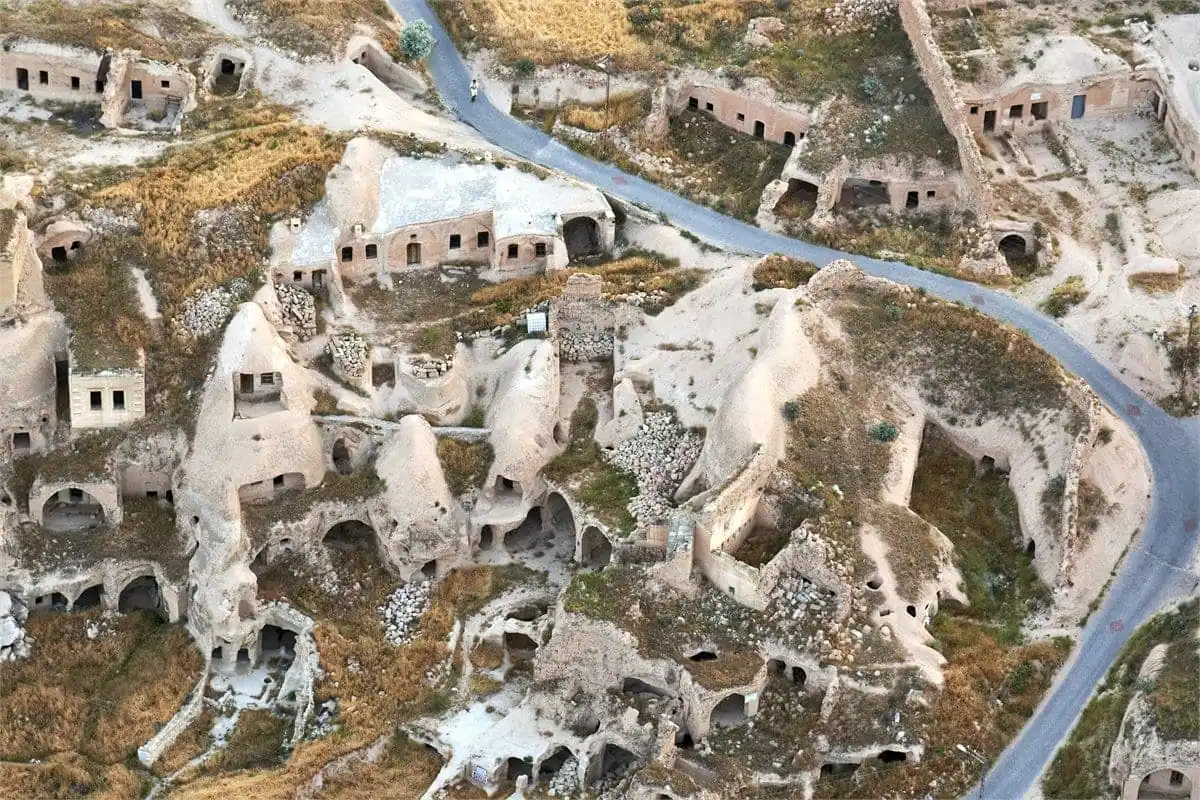
Uçhisar is what happens when a landscape provides a skyscraper and people simply move in. The castle is not built on the rock; it is the rock — a tuff monolith sixty meters tall, drilled through with rooms, stairs, cisterns and dovecotes until it became a vertical village with a garrison’s view.
The name means roughly “outer fortress”, and with its siblings at Ortahisar and Ürgüp it formed a Byzantine early-warning chain across the plateau: signal fires by night, smoke by day, and beneath each fortress the tunnels where the population waited out whatever the signal announced. The interior passages you climb today were escape routes and stores; the little square windows that pepper the summit were pigeon lofts, feeding the fields below.
The view from the top
The climb is ten to fifteen minutes of stairs, and the reward is the definitive Cappadocia panorama: Göreme’s cones spilling down the valley to the northeast, Pigeon Valley curling away directly below, Ortahisar’s rival rock to the east, and on the horizon the snow-streaked cone of Erciyes — the volcano whose ash, thirty million years ago, laid down every fairy chimney you can see. It is the one viewpoint that explains the whole region in a single slow turn.
Late afternoon is the hour: the valleys fill with shadow-drawn texture, the tuff goes honey-colored and the balloons’ launch fields lie mapped out below for the next morning. Sunset itself draws a crowd to the summit, but a modest one by Cappadocian standards.
The village everyone drives past
Coaches photograph the castle from the viewpoint and roll on, which is why Uçhisar village keeps a calm Göreme lost some years ago. Its lanes hold stone mansions turned quiet hotels, a weekday market, and the trailhead into Pigeon Valley — a lovely downhill hour to Göreme past thousands of carved dovecotes. On a private tour we often send the vehicle ahead and walk guests down; it is the best free hour in the region.
Sources & further reading
- UNESCO: Rock Sites of Cappadocia — heritage context
- Britannica: Cappadocia — regional history