
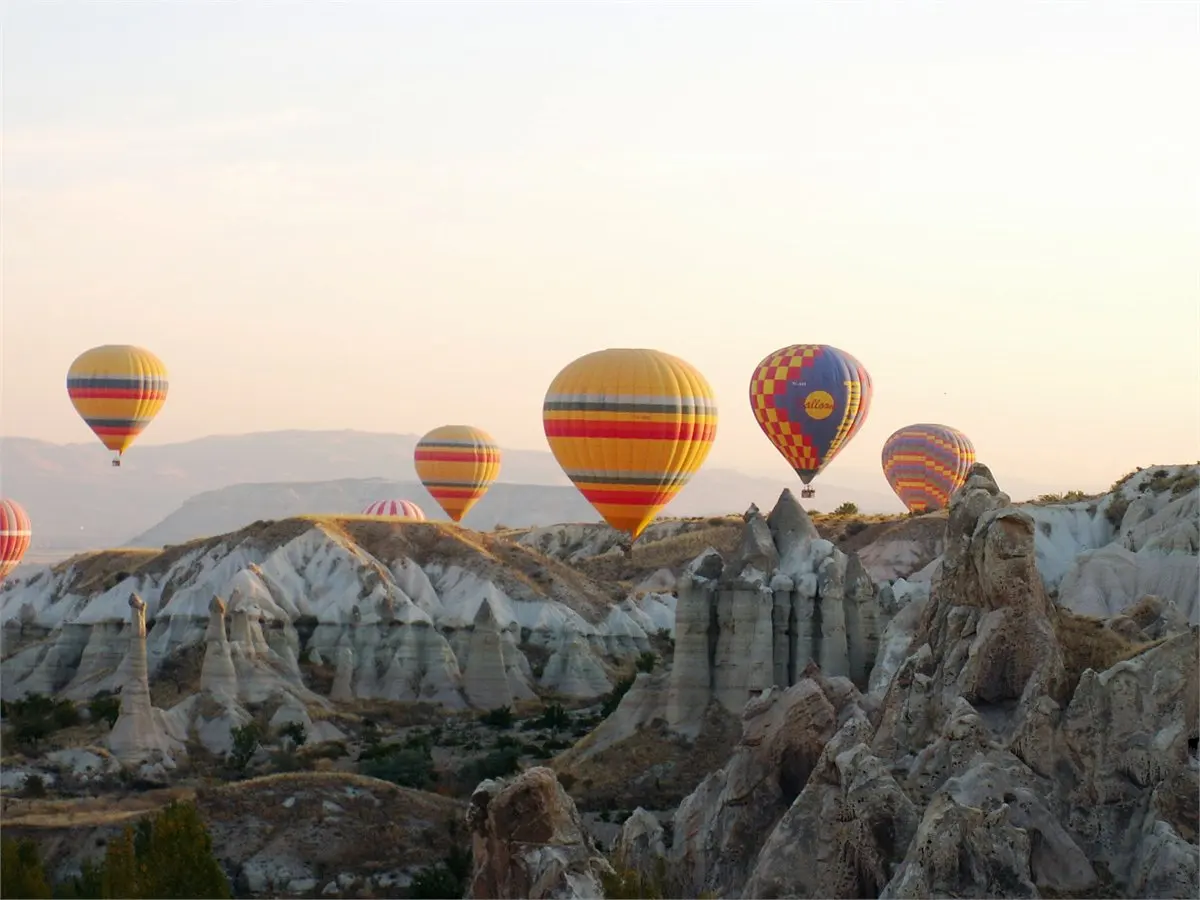
We are asked this daily, so here is the honest architecture of the year. Cappadocia sits at a thousand meters in a continental climate: real winter, dry blazing summer, and two long, glorious shoulder seasons that are — no suspense — the answer for most people.
Spring: April to June
The valleys green up, wild irises and blossom edge the trails, daytimes run a perfect 15–25°C and the balloon-flying rate climbs week by week. May is arguably the single best month — and knows it: book hotels and guides ahead. June adds warmth and subtracts some crowd as the school year ends elsewhere. Hiking is at its best; the Rose–Red Valley walk in blossom season is the region at full charm.
Summer: July and August
Hot — 30°C-ish — but dry and entirely workable, because the region schedules itself around the sun: dawn balloons, morning sights, a proper siesta, golden-hour valleys. The underground cities hold 14°C all summer and become the smuggest stop on any August afternoon. Flights are reliable, evenings are warm and long. Families locked to school vacations should not hesitate; just hydrate like it is a job. Our Cappadocia weather in August guide has the real temperatures and an hour-by-hour way to plan around the heat.
Autumn: September and October
The mirror of spring, in amber: harvest in the vineyards, long low light that photographers cross oceans for, stable air that makes these the most reliable balloon months of all. September is busy and deserves it; October may be the connoisseur’s pick — the poplars in the Ihlara gorge turn gold and the crowds thin week by week. Our Cappadocia weather in October guide has the real temperatures and explains why the month asks for layers more than any other. November is the quiet door closing: grayer, cheaper, still flyable more often than not — our Cappadocia weather in November guide has the real temperatures and an honest answer on snow.
Winter: December to March
The secret season. Snow on the fairy chimneys is the most beautiful thing this region does, and it does it for a handful of days at a time between December and March. Costs drop, crowds vanish, cave hotels light their stoves — and the trade-off is stated plainly: balloon cancellation rates rise steeply, sometimes several mornings running. December is where it begins, and it is the first month of the year whose average night sits below freezing; our Cappadocia weather in December guide has the real temperatures and an honest answer on snow. March is where it loosens its grip — the first month since November whose average night climbs back above freezing, with late snow still possible and muddy trails after a thaw; our Cappadocia weather in March guide has the real numbers. Winter visitors should stay three nights minimum for the dawn attempts, pack properly, and treat a snow-day flight as the lottery win it is. The valleys themselves, walked in snow, need no luck at all.
| Months | Weather | Balloons | Crowds | Our take |
|---|---|---|---|---|
| Apr–Jun | 15–25°C, green | Good → very good | Building to high | The all-round winner |
| Jul–Aug | ~30°C, dry | Very good | High | Great with a siesta rhythm |
| Sep–Oct | 15–25°C, golden | The most reliable | High → easing | Photographer’s pick |
| Nov | 5–15°C, gray-gold | Fair | Low | Underrated bargain |
| Dec–Mar | Cold, some snow | Unreliable | Lowest | Magical, with patience |
Sources & further reading
- Turkish State Meteorological Service — Nevşehir — official climate data