
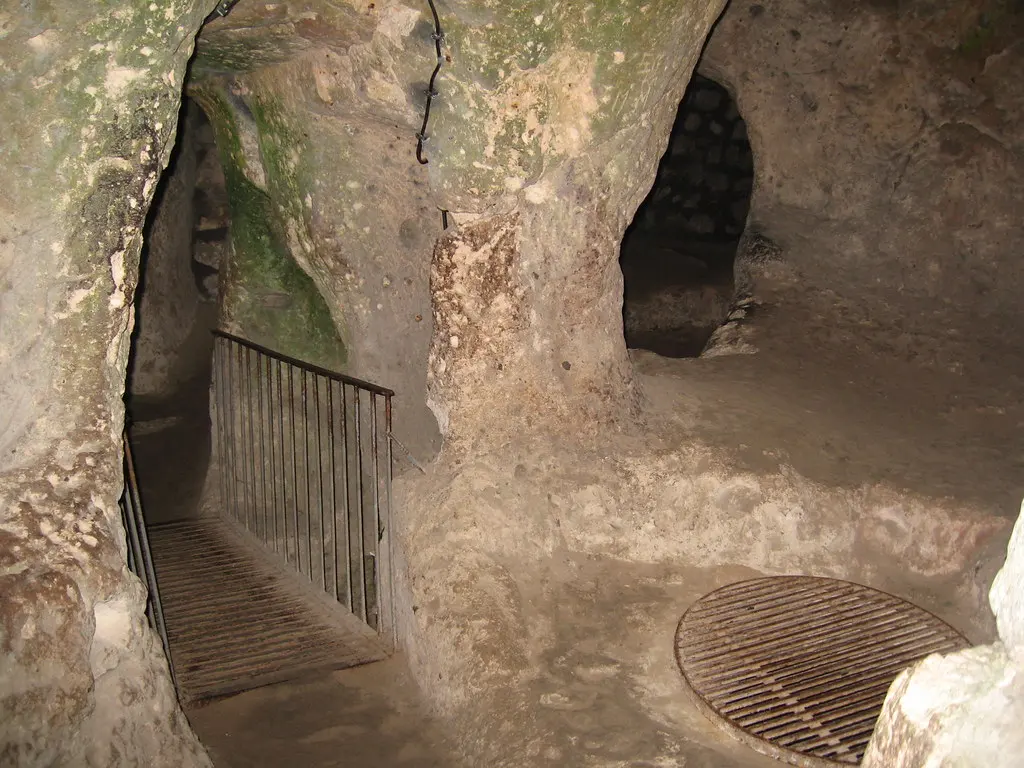
Kaymaklı and Derinkuyu are usually spoken of together and usually chosen between, so here is the distinction in one line: Derinkuyu is a shaft, Kaymaklı is a sponge. It spreads beneath its modern village in wide horizontal galleries around a central ventilation chimney, and its corridors — cut generous for the pack animals that worked down here — are the most comfortable in Cappadocia.
Around a hundred families’ worth of chambers open off the route: kitchens with wine cellars attached (priorities were clear), grindstones for grain, a copper-smelting nook with its draft channel still legible, storerooms whose carved amphora-racks look ready for this autumn’s harvest. The famous block of andesite — a hard volcanic slab used as a tool-grinding surface, pocked with cup-shaped hollows — sits on the third level and puzzles archaeologists happily to this day.
Same logic, easier body
All the siege engineering of Derinkuyu repeats here — millstone doors in their slots, deliberate stooping points at defensive pinches, wells sealed from the surface — but the overall experience asks much less of knees, backs and nerves. Families with children, taller guests and anyone ambivalent about enclosure will simply have a better hour at Kaymaklı, and see the same civilization.
The andesite stone, and other puzzles
On the third level sits Kaymaklı's most argued-over object: a block of hard andesite, pocked with dozens of small cup-shaped hollows, set into a room of its own. The usual reading is a tool-sharpening or ore-processing surface — the hollows would suit crushing and grinding — but nobody has settled it, and guides here will happily give you three theories before lunch. It is a good reminder that these cities are still only partly understood.
The copper-smelting nook nearby is less ambiguous: a small chamber with a draft channel cut to feed it air, blackened by fires that stopped burning centuries ago. Metalworking underground sounds mad until you remember the ventilation system was engineered well enough to make it survivable.
Kaymaklı vs Derinkuyu — choosing between them
| Kaymaklı | Derinkuyu | |
|---|---|---|
| Character | Wide and horizontal | Deep and vertical |
| Levels open | 4 | 8 |
| Corridors | Broader — pack animals worked them | Narrower, more stooping |
| Best for | Families, tall guests, nervous visitors | Depth, drama, the full descent |
| From Göreme | ~30 min | ~40 min |
| Time inside | ~1 hour | ~1 hour |
Seeing both on the same trip is possible and, honestly, repetitive — they rhyme too closely, and the second dilutes the first. Choose by temperament and spend the hours you save in a valley instead.
Visiting
Four of an estimated eight levels are open, one-way and lit; the visit runs about an hour. It is twenty minutes from Derinkuyu, so itineraries choose one — our advice sits in the FAQ of the underground city tour, but the short version is: drama, Derinkuyu; comfort, Kaymaklı; and never both in one day unless carved rock is your profession.
The village square at the entrance is a pleasant, unglamorous place to sit afterwards — honest shops, cheap tea and the most patient cats in Nevşehir province. Kaymaklı appears on our Green Tour whenever guests tell us in advance that tight spaces worry them, and on tailor-made days by request.
Sources & further reading
- UNESCO: Rock Sites of Cappadocia — heritage listing