
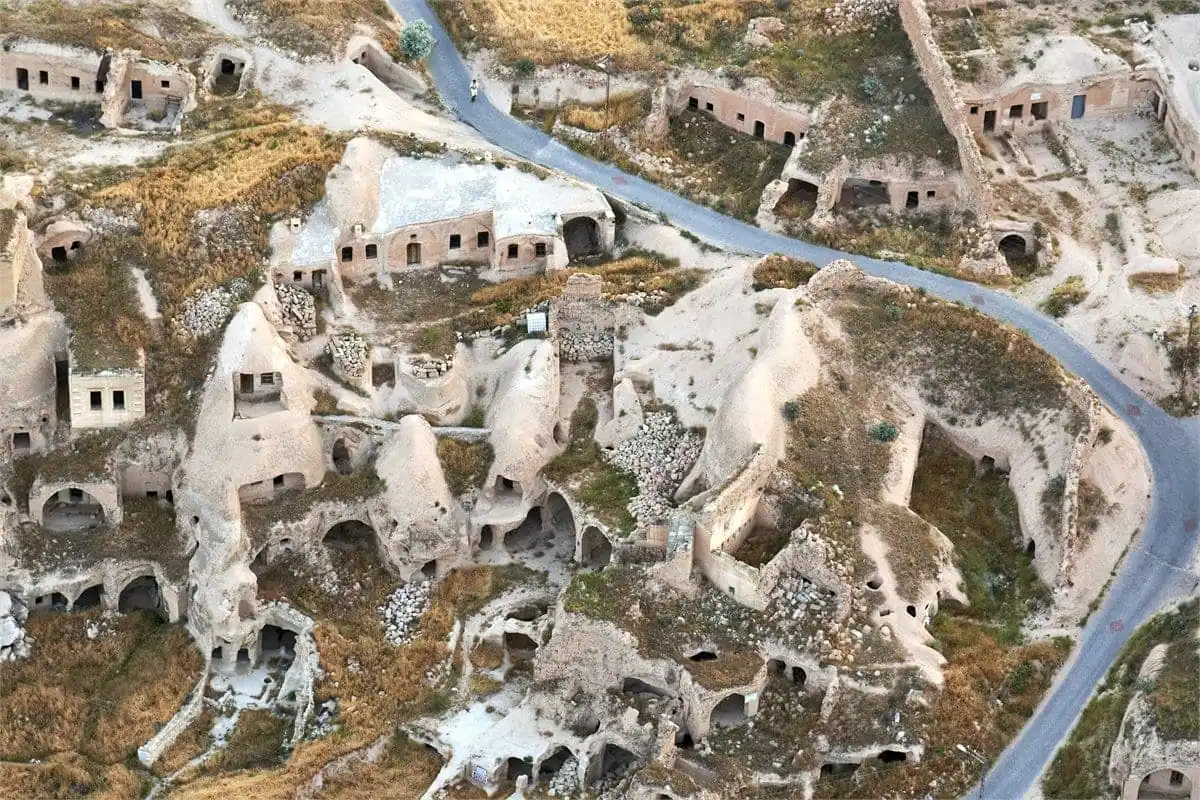
Ortahisar — “middle fortress” — sits ten minutes from Göreme and a world away from its economy. Its castle rock is nearly Uçhisar’s equal; its old lanes tumble downhill in photogenic decay; and its main square still belongs to farmers, dominoes and tea at prices unadjusted for tourism. If you want to see what Cappadocian towns were like before the balloons, this is the last easy look.
The castle is the same idea as Uçhisar’s — a tuff monolith drilled into a fortress-village — climbable by ladder-stairs to a summit view that trades Uçhisar’s crowds for solitude. Around its feet, the old town’s arched stone houses are being slowly, gently restored; the lanes reward twenty minutes of aimless walking better than anywhere in the region.
The lemon caves
Ortahisar’s modern specialty is splendidly unglamorous: cold storage. The tuff caves under and around the town hold a constant cool humidity that turns out to be ideal for citrus, and for decades lemons and oranges from the Mediterranean coast have been trucked up here to wait out the market in carved caves — millions of kilos of them. Walk the right lanes in season and whole streets smell of lemon. It is the perfect Ortahisar fact: the same geology that gave Göreme its churches gave this town a refrigeration industry.
Visiting
Ortahisar earns an hour on any tailor-made day: castle, lanes, square, tea. Photographers should add the Kızılçukur rim viewpoints just outside town — the classic sunset stand over Red Valley — and anyone tired of crowds should simply come here at golden hour and watch the castle rock light up with the town going about its business below. Some of our favorite guest photographs of the whole region were taken from a plastic chair in Ortahisar square.
Sources & further reading
- Britannica: Cappadocia — regional background