
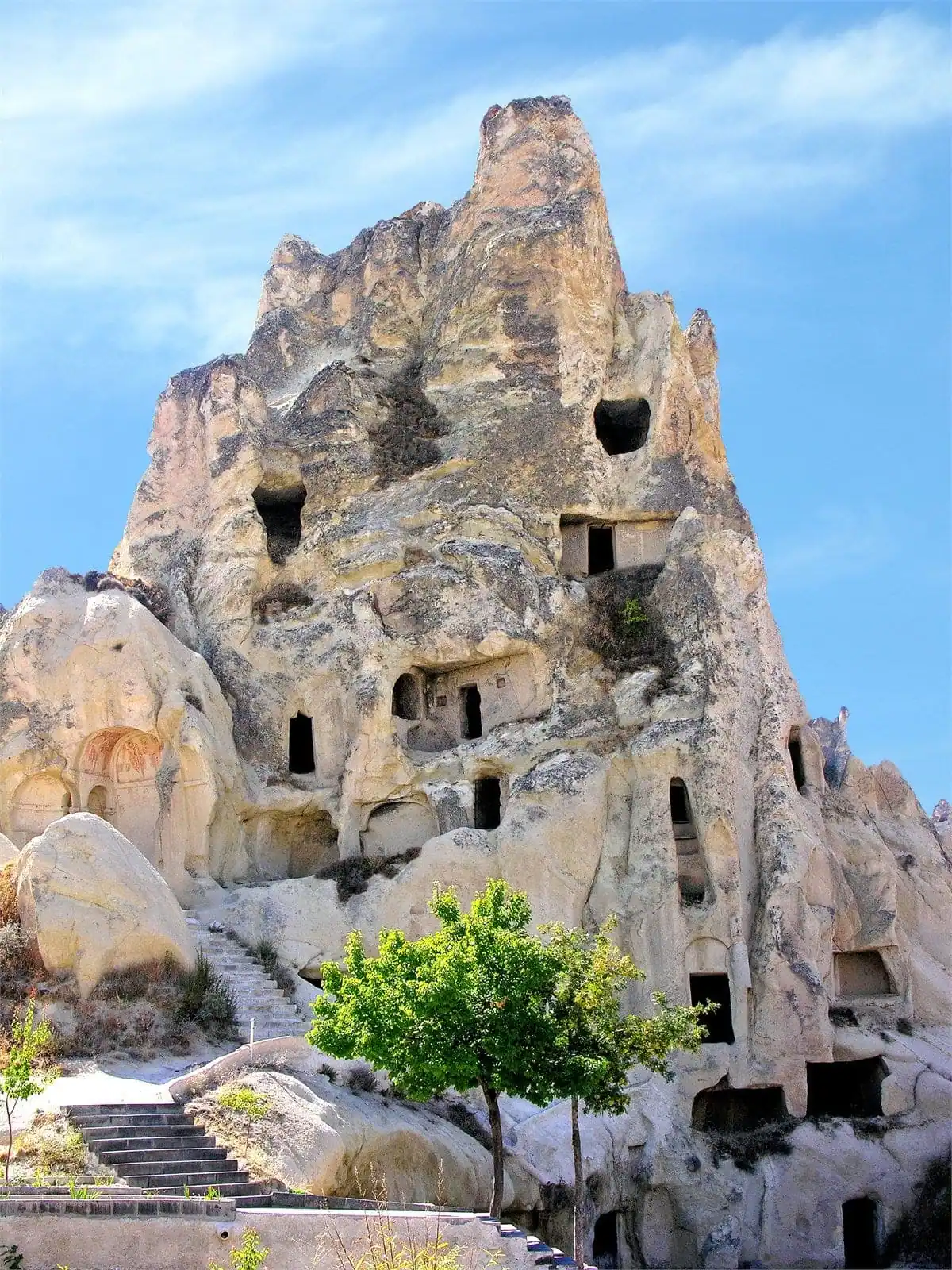
Göreme’s churches are jewel boxes; Selime is a train station. The monastic complex carved into the cliffs above Selime village is the largest religious rock-cutting in Cappadocia — a working community’s whole infrastructure hollowed from one mountainside, with a church so large everyone calls it the cathedral and nobody argues.
The cathedral’s scale is the headline: a nave and two aisles divided by carved rock columns, galleries above, faded frescoes high on the walls — a full basilica plan executed by subtraction. Standing in it recalibrates what you think hand tools can do to a mountain. Around it spread the support rooms that make the place legible as a community rather than a monument: a kitchen with a soot-funneled chimney bored up through the rock, a refectory with rock benches, stables with mangers (the caravans stopped here — Selime sat on a trade road), cells, cisterns and watch-points.
Fortress, monastery, caravanserai
Selime guarded the northern mouth of the Ihlara gorge, and it wore every hat the position implied: monastery from around the eighth century, refuge and strongpoint in raiding seasons, and an unofficial caravanserai for the road below — commerce and contemplation sharing a staircase. The Star Wars rumor, which you will hear locally, is affectionate nonsense: nothing was filmed here, and the place needs no borrowed mythology. It has the real kind.
Visiting
The climb from the road takes ten steep minutes on smoothed rock — proper shoes, hands free — and the complex absorbs a good hour. Come as the Green Tour does, at the end of the Ihlara walk, and the day has a natural crescendo: river, churches, then the mountain someone turned into a building. Late light is glorious on the cliff face, and the view from the terraces — gorge one way, volcano the other — explains the site’s every century in one look.
Sources & further reading
- UNESCO: Rock Sites of Cappadocia — heritage framework