
Souvenir economies usually bury their real crafts under fridge magnets; Cappadocia’s genuine articles have survived the burial unusually well, because all three of its signature crafts still serve their original customers. The pots still cook. The carpets still warm floors. The blue eyes still guard doorways — including, you will notice, the doorways of shops selling blue eyes.
Clay: the four-thousand-year wheel
The potters of Avanos work the iron-red clay of the Kızılırmak exactly where their Hittite predecessors dug it, and a master at the foot-kicked wheel remains one of the region’s best free shows — two kilos of river mud centerd in seconds, walls drawn up thin as card, a wine jug’s ring-body closed with a flourish. The local repertoire runs from cooking testi pots (see them meet their destiny in our food guide) to museum-grade reproduction Hittite vessels painted over months. Visitors are invited to try the wheel; the clay is forgiving, dignity less so.
Wool: the loom in the winter room
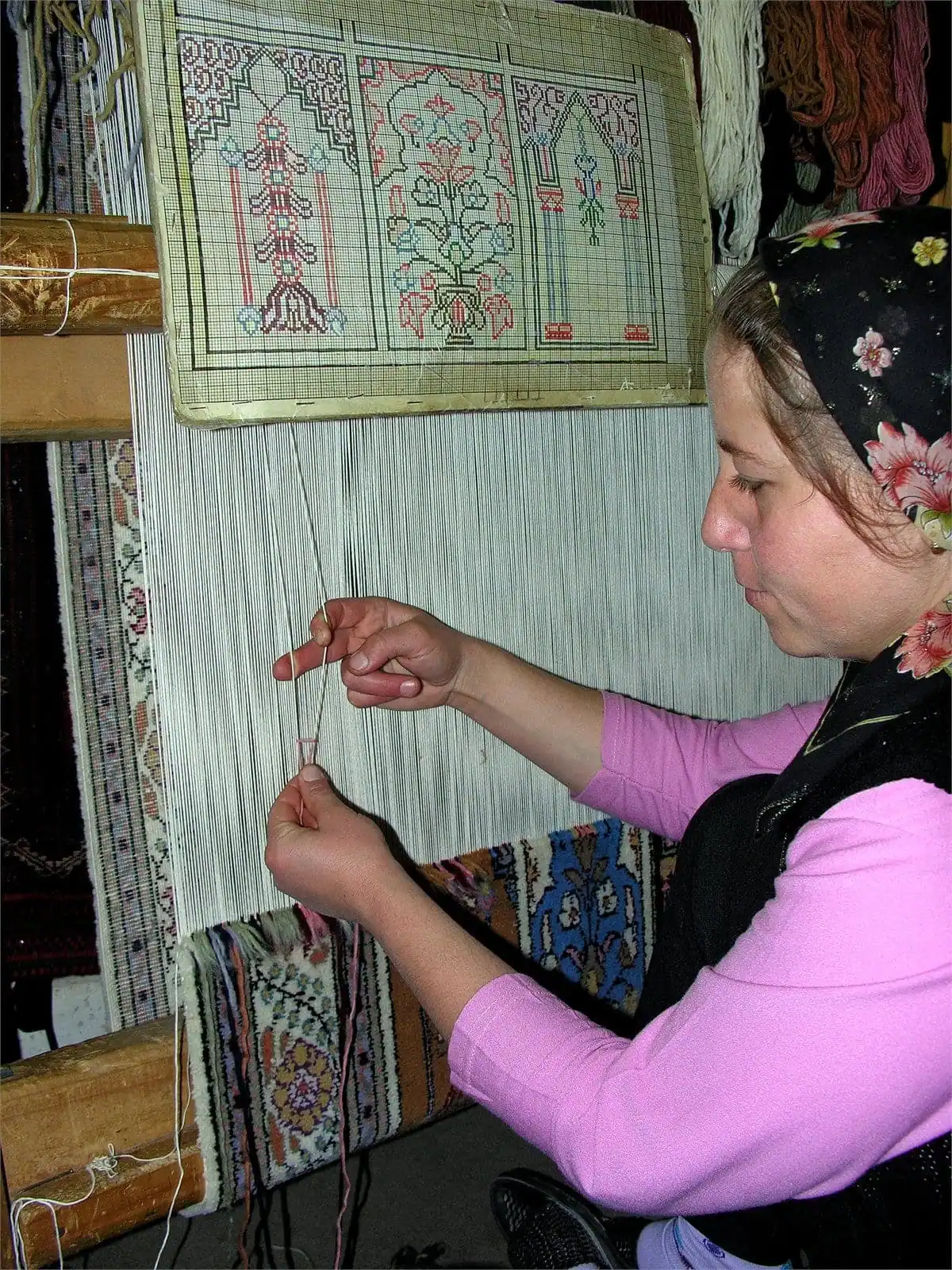
Anatolian carpet weaving is village winter-work turned art form: wool spun from plateau flocks, dyed with madder root, walnut husk and indigo, and knotted by memory into patterns that name their maker’s district the way an accent names a town. In Cappadocia’s workshops you can watch weavers at the vertical loom — the double-knot Turkish technique, hundreds of knots an hour, a fine rug representing months — and learn to read a few motifs: ram’s horns for strength, the elibelinde goddess for fertility, running water for life. Whether or not a carpet flies home with you, ten minutes at a loom recalibrates what the word "handmade" costs.
Glass: the eye against the eye
The nazar boncuğu — the blue-and-white glass eye pinned to babies, hung in cars, mortared into new buildings — is Anatolia’s charm against envious looks, a belief with roots older than any current religion in the land. Cappadocia displays it at landmark scale on the famous wishing tree above Pigeon Valley, strung with thousands of eyes staring down the valley’s admirers. Buy one for pennies, hang it where envy gathers, and you have participated correctly in four thousand years of Anatolian risk management.
A plain word on shopping, because it decides whether craft encounters are a pleasure: our tours visit working ateliers, browsing is welcome, and there is zero obligation or pressure to buy — walking out with nothing but clay dust on your hands is a perfectly honorable exit. The demonstrations are the point; commerce is optional.
Sources & further reading
- Britannica: the Hittites — the pottery tradition’s beginnings
- UNESCO Intangible Heritage: Turkish ceramic craft — the living-craft framework