
Central Anatolian cooking is farm cooking: wheat, lamb, yogurt, orchard fruit and whatever the wood oven is doing today. Cappadocia dresses it with one piece of theater and otherwise serves it straight — and eating well here is mostly a matter of knowing what the region does best and where it still does it for its own people.
Testi kebab: the pot ceremony
The signature dish is testi kebab — lamb or beef stewed with vegetables inside a sealed clay pot from Avanos, cooked slow in embers, and cracked open at your table with a short sword and unreasonable satisfaction. Yes, it is theater for visitors; it is also genuinely fine slow cooking, the clay steaming the meat tender in its own juices. Order it once, properly — the good kitchens want notice, because a real testi takes hours — and applaud the smash. Everyone applauds the smash.
The quieter masterpieces
- Mantı — dumplings the size of a thumbnail under garlic yogurt and paprika butter. The smaller the mantı, the greater the honor to the guest; a proper plate represents hours of folding.
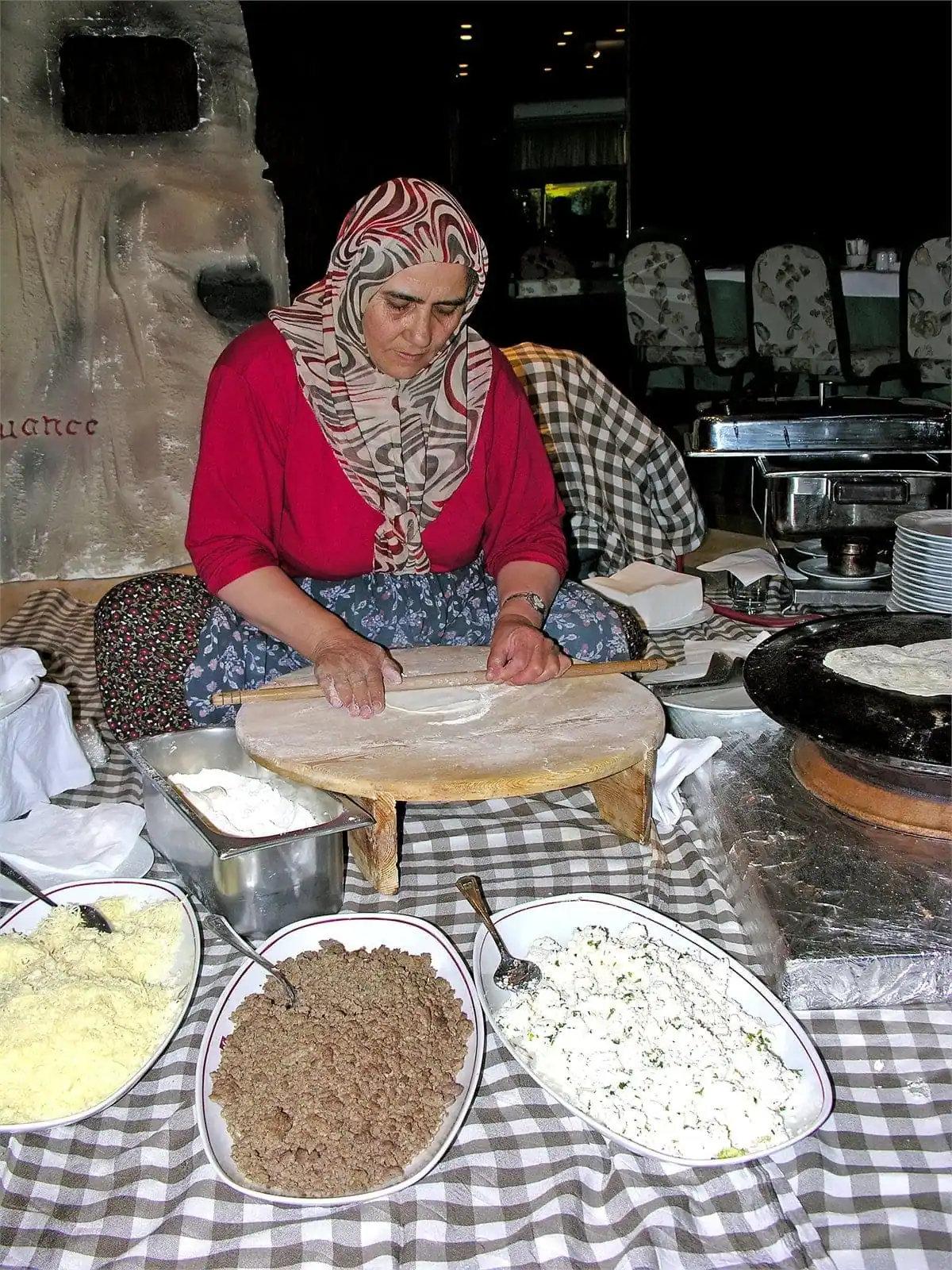
- Gözleme — flatbread rolled thin, stuffed with cheese, spinach or potato, and blistered on a domed saç griddle, ideally by a village cook who has made forty thousand of them. The one on our tours’ lunch stops disappears fastest of anything on the table.
- Kuru fasulye & plateau staples — white beans in tomato and butter, bulgur pilaf, lentil soup: the daily food of Anatolia, and the dishes by which locals actually judge a kitchen.
- Clay-oven bread & village breakfast — Cappadocian breakfasts sprawl: warm bread, honey and clotted kaymak, olives, tomatoes, village cheese, eggs with sucuk. Skip lunch plans accordingly.
- Apricots, grapes and pekmez — the orchard fruits of the volcanic soil, eaten fresh, dried, or boiled into pekmez, the grape molasses that sweetened Anatolia for millennia before sugar.
Finding the honest kitchens
Göreme has kitchens for every taste, and a few simple habits lead you to the most local cooking: eat where the menu is in one language fewer, where tractors or dolmuş minibuses park at lunch, and where a grandmother is visibly in charge of anything. On tour days we simply take you to such places — lunch stops are chosen for where local drivers eat, and whatever is local and fresh that day is what the kitchen cooks.
Round the table off with the region’s own bottle — the story of Cappadocia’s volcanic wines deserves its own read — or with çay in a valley kiosk, which costs pennies and buys membership of Anatolia’s true national institution.
Sources & further reading
- Britannica: Cappadocia — regional context