
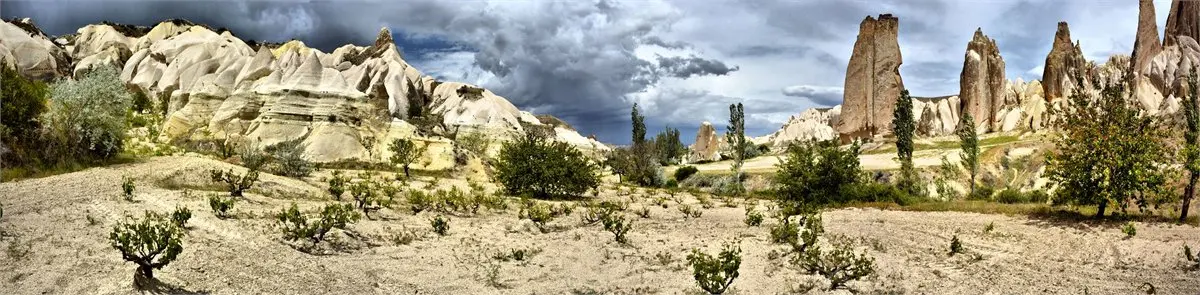
Visitors are routinely surprised that Cappadocia is wine country, which would amuse the Hittites — their tablets recorded wine offerings from these plateaus nearly four thousand years ago, and the ideogram scholars read as "wine" appears in Anatolia about as early as writing does. This may be, by some arguments, the oldest continuously producing wine landscape on earth. It is certainly the only one where the cellars come pre-carved.
What the volcano does for the glass
The recipe is real, not romance. Volcanic tuff soils drain sharply and hold minerals; the plateau’s 1,000-meter altitude swings hot days into cold nights, which preserves acidity; and low rainfall concentrates small, intense crops. The same trinity — volcanic soil, altitude, diurnal swing — underwrites the famous wines of Etna and Santorini, and Cappadocia has held the patent longest. Phylloxera, the root louse that devastated Europe’s vineyards, also struggles in ash soils: some local plantings survive on their own original roots, a rarity that makes ampelographers emotional.
The grapes to know
Emir is the region’s own: a white grown here and effectively nowhere else, crisp, citrus-and-wet-stone mineral, built for the local altitude and startlingly good with everything from river trout to testi kebab. Reds lean on Kalecik Karası — Ankara’s elegant, cherry-toned grape that thrives here — plus the burly eastern pair Öküzgözü and Boğazkere for depth. The pleasure of tasting in Cappadocia is that these names arrive without preconceptions; nobody lands with opinions about Emir, so the glass gets to speak first.
Cellars with history in the walls
Wine here always lived in the rock. Byzantine monasteries pressed grapes in carved basins you can still see at Göreme; the underground cities kept wineries on their upper levels — morale being a siege supply like any other — and village houses pressed the harvest in rock hollows under the floor. Today’s producers, centerd on Ürgüp, age their bottles in the same kind of carved cellars at the same eternal 14°C, which makes a tasting here a historical reenactment that happens to end in wine.
Taste as part of a tailor-made afternoon — cellars, a vineyard drive and a driver who stays cheerfully sober — and read more of the region’s food story in our eating guide.
Sources & further reading
- Britannica: the Hittites — the first recorded local vintners
- International Organisation of Vine and Wine — production statistics