
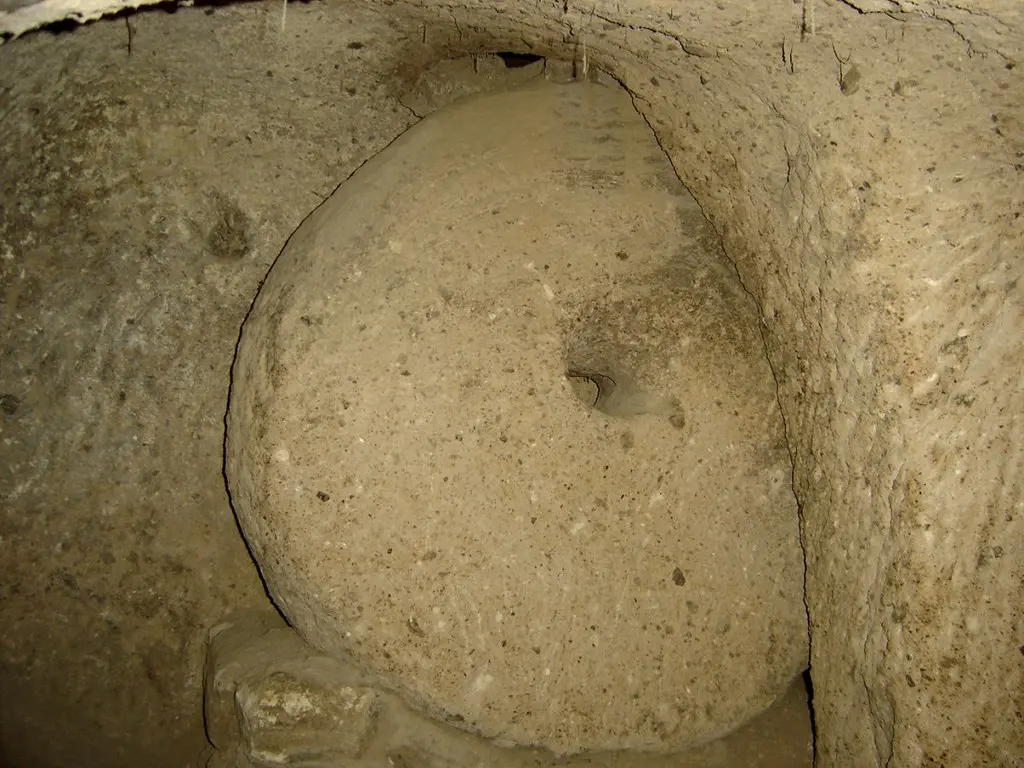
The plateau of Cappadocia is Swiss cheese on a civilizational scale: more than two hundred known underground settlements, from single hidden cellars to the eight open levels of Derinkuyu and the quieter northern galleries of Özkonak Underground City, near Avanos. The question every visitor asks in the first corridor — who did this? — has a longer answer than any signboard admits, because the honest reply is: several peoples, across perhaps three thousand years, each inheriting and deepening the work of the last.
The deep beginnings
The oldest layers resist dating — you cannot carbon-date a hole — but written hints go back startlingly far. The Hittites, who ruled Anatolia in the Bronze Age, stored goods and possibly sheltered in carved chambers here; their vessels and place-names survive in the region. The Phrygians who followed (8th–6th centuries BC) are many scholars’ candidates for the first true excavation phases at Derinkuyu. And in the 4th century BC the Greek soldier-writer Xenophon, marching mercenaries across Anatolia, described villagers living in excavated houses underground with their livestock — the earliest surviving eyewitness account of the Cappadocian underworld, written before Rome mattered.
The Byzantine masterwork
What visitors walk today, though, is overwhelmingly a Byzantine achievement. From the 7th century AD, Arab–Byzantine wars turned central Anatolia into a raiding corridor for three hundred years, and the plateau’s villages responded by engineering disappearance: existing caves were connected, deepened and systematized into true cities — ventilation shafts running the full depth, wells sealed from the surface, stables, wineries, chapels, schools, and the great millstone doors that could seal each level from inside. The design brief was precise: hold everyone in the village, plus animals and a season’s food, for weeks, invisibly. It worked for centuries, which is why the cities kept being maintained until the raids themselves became history.
A moving footnote: the tunnels’ last regular users were the region’s Cappadocian Greek communities, who still knew them as refuges into the early 20th century. After the 1923 population exchange emptied those villages, local memory of the deep levels faded within a generation — so completely that what came next was possible.
1963: the wall that opened
In 1963, a Derinkuyu householder renovating his cellar broke through a wall and found a passage that did not stop. Archaeologists followed the passage down through level after forgotten level; the city opened to visitors in 1969, and the region has been recounting its own basement ever since — new sections and whole new cities are still being found, most recently under Nevşehir itself. The underworld, it turns out, was never lost. It was just waiting behind the plaster.
Walk it with context on our underground city tour or as part of the Green Tour — the corridors say little on their own, and everything with a guide who can read them. For how these centuries fit the wider story, see our history of Cappadocia.
Sources & further reading
- Britannica: Cappadocia — historical framework
- UNESCO: Rock Sites of Cappadocia — includes the underground settlements
- Xenophon, Anabasis 4.5 — the ancient eyewitness passage